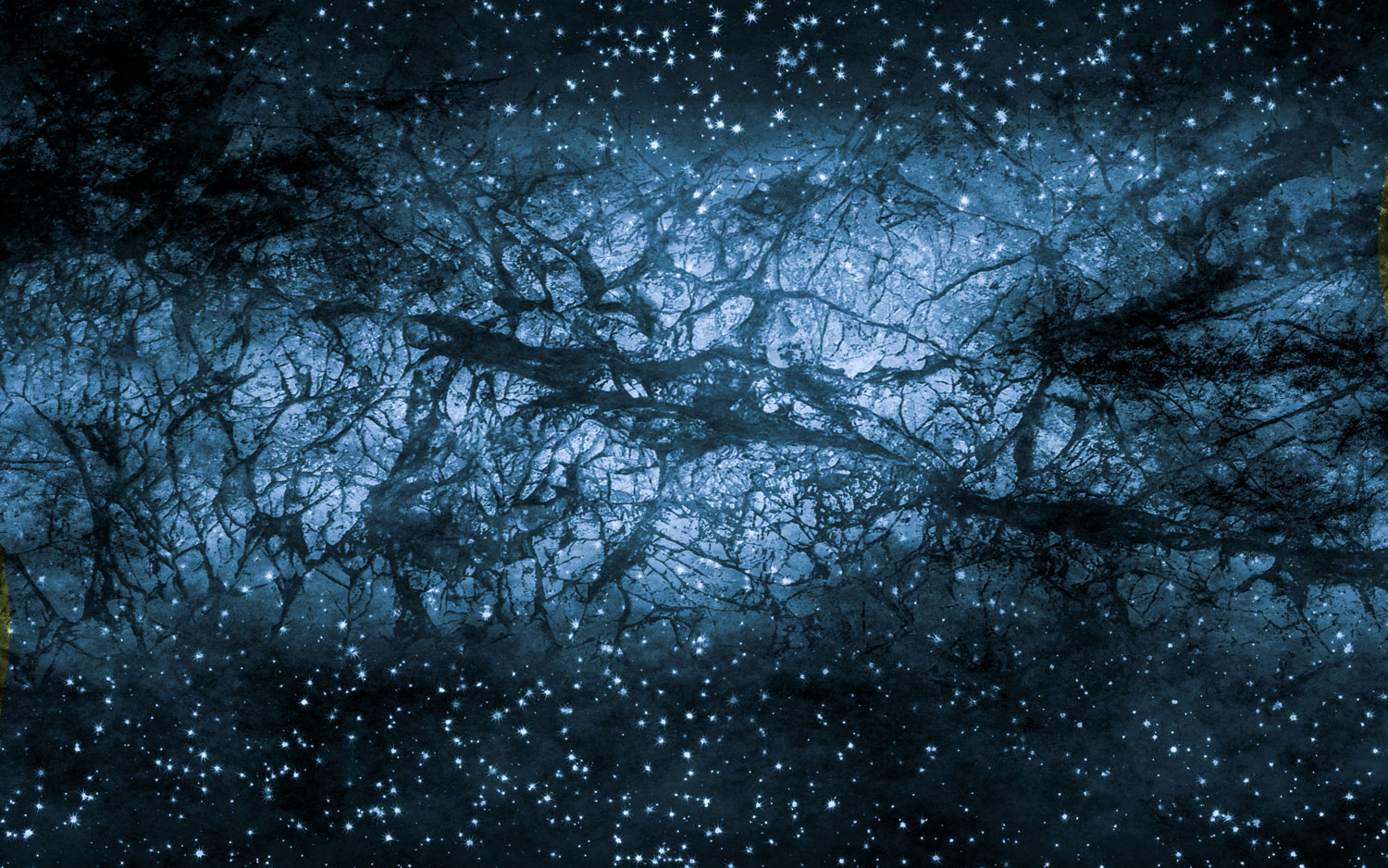
One might think that the universe is composed of galaxies, stars, and planets. However, the majority of it is made up of a substance that cannot be seen. This substance is in fact dark matter. Fritz Zwicky coined the term Dark Matter in the 1930s. Scientists are unsure what dark matter is but know of its existence only through its effects on normal matter through gravity. Many theories about the composition and existence of dark matter have been discovered, that prove its existence and its purpose of holding the universe together. Dark Matter makes up the majority of our universe. It is made up of exotic particles and is unable to be seen because it doesn’t emit or reflect light. Atoms, molecules and subatomic particles are all dark matter. It is know that dark matter is composed of baryons, and not antimatter. Scientists estimate its presence based on gravitational effects on normal matter and by x-rays emitted by hot dark matter. It can be described as a non-luminous, dominant form of matter in galaxies and throughout the universe. In fact, it holds most of the Milky Ways mass. Dark Matter forms a spherical halo in the Milkway and extends to a distance of 100-200 kpc from the center of the galaxy. Dark Matter is split into 2 categories: Baryonic and Non-Baryonic. The Non—Baryonic category is further split into hot dark matter and cold dark matter. Hot dark matter is composed of low mass particles that move at very high velocities creating this very hot gas. Cold Dark Matter is composed of massive sub-relativistic velocities forming colder gas.
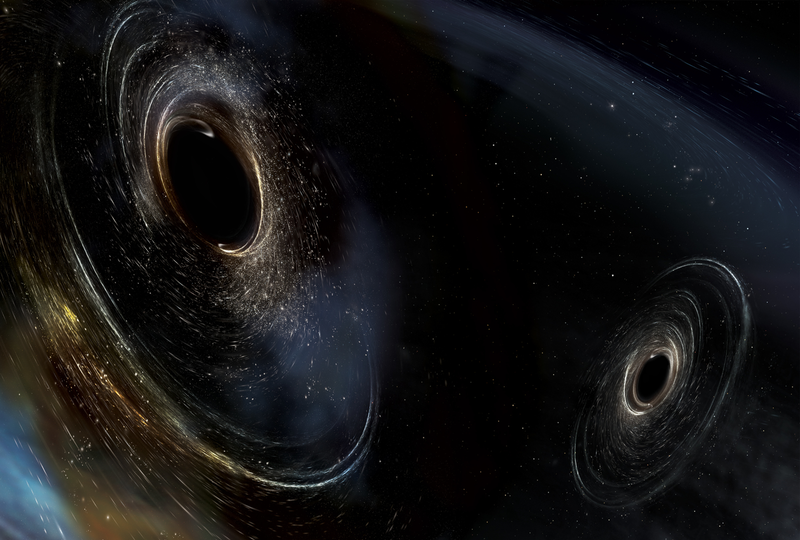
There are many theories and possibilities for what exactly Dark Matter is composed of. One proposal has to do with MACHOS. Machos are massive compact halo objects such as brown dwarfs, white dwarfs or black holes. White dwarfs are leftovers of the core of small stars. There are not enough white dwarfs to make up for the mass of dark matter. Brown dwarfs, are objects that didn’t accumulate enough dust or gas to start fusing hydrogen and become main sequence stars. Brown dwarfs just like white dwarfs aren’t numerous enough. The second theory/possibility is that dark matter is composed of subatomic particles or WIMPS. Wimps are weakly interacting massive particles. For example, Neutrinos, these particles have little to no mass and move at high speeds. These particles cannot account for the dark matter in our galaxy because they are unable to clump together since they are moving at such high speeds. If they cant clump together they wouldn’t be able to form a halo around our galaxy, like we know dark matter does. Other subatomic particles that scientists and astronomers are investigating to see if they could in fact make up dark matter are new subatomic particles (move slowly and are cold), neutralinos (heavier and slower than neutrinos), and axions (small, neutral, low mass). WIMPS don’t absorb or emit electromagnetic radiation. They have masses 10 to 10,000 times greater than a proton and if they collided would deposit a small amount of heat. Scientists are still running experiments to determine what makes up dark matter.
Dark Matter is very important to our galaxy and others. It is what keeps the galaxies from drifting apart. It is known that the mass of the luminous matter in our galaxy is not enough to hold the cluster together; therefore non-luminous dark matter is present in large amounts. In fact the mass needed to hold the cluster (galaxy) together is 10 times greater than the mass of the luminous matter. The statement above is what is called the Dark Matter Problem: “the luminous mass of a cluster of galaxies is not large enough to account for the observed motions of the galaxies; a large amount of unobserved mass must also be present,” (Freedman, 663). The Dark Matter Problem dates from 1930.
Astronomers know dark matter exists and how it is distributed by looking at the rotation curve. These rotation curves of galaxies along with the gravitational bending of light by clusters of galaxies proved that Dark Matter can be found only within and right outside galaxies, not in between galaxies. The speed of stars in a galaxy moving from the center are displayed on a rotation curve. On these graphs, the speeds remain constant until they reach the edge of the galaxy. In reality, when the star reaches the edge true edge of the galaxy there should be a decline in orbital speed. However, because the decline is not seen, astronomer concludes that dark matter is present outside the center of the galaxy. Hot gases account for a small percentage of dark matter. The gases are detected by their X-ray emission. Gravitational bending of lights rays provides evidence of dark matter. Gravity of a star can deflect only a few arc seconds, while a galaxy can produce way more massive deflections. These deflections can be used to discover the galaxies mass. A gravitational lens is a source of gravity that distorts background mass. In order for they’re to be a bending of light rays, the alignment between Earth, the massive galaxy, and remote background light must be perfect. A massive object (galaxy) can deflect light rays like a lens so the observer sees more than one image of the distant galaxy. Light rays bend and converge upon the observer, and the massive galaxy acts as a gravitational lens. There are three types of shapes that the distorted image of the distant object can appear as: Einstein’s ring (sphere shaped), Einstein’s cross (elliptical), or as a cluster. Astronomers can find out the mass of the gravitational lens by measuring the angle of bending of the light rays. By using this method along with the rotation curves and X-ray images, it proved that galactic clusters have high masses. The high masses are greater than those measured by the seen matter (luminous) therefore proving the existence of dark matter.
Dark Matter is a mystery. It still is the most important question in science, because it is the reason that our galaxies have not drifted away. Not only does dark matter play a main role in the existence of our galaxy it also will determine the future of our galaxy. Gravity will determine the fate of the expansion of our universe, but gravity is dependent upon the mass of the universe, which proved by the above reasons is mostly dark matter.



 Terra Nostra